

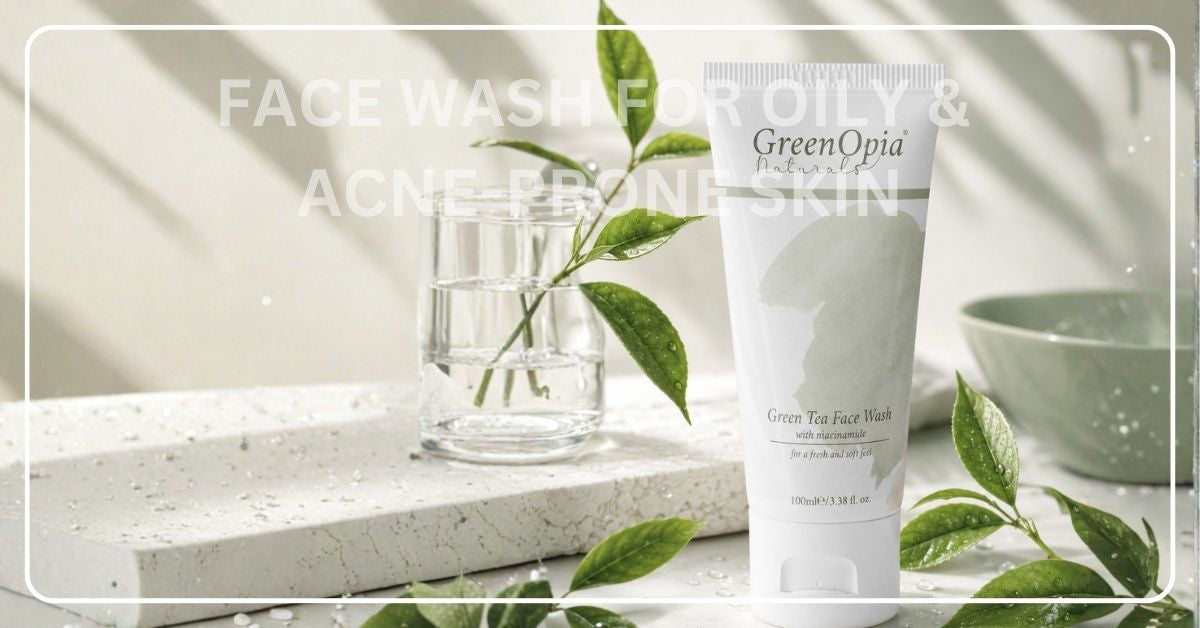
If you're wondering which face wash is best for oily acne prone skin, start with one simple rule: choose a cleanser that removes excess oil, sweat, sunscreen and everyday dirt without leaving your face feeling painfully dry or tight.
For most people with oily and acne-prone skin, a gentle facial cleanser made for regular use is a better starting point than repeatedly scrubbing the skin or washing it every few hours. Your face should feel clean after washing, not squeaky, stretched or irritated.
That distinction sounds small. In real life, it makes a big difference.
Why Choosing a Face Wash for Oily Skin Can Be Confusing
Walk into any skincare aisle and you'll see words like oil control, deep cleansing, purifying, clarifying and acne care everywhere.
Naturally, if your forehead looks shiny by lunchtime or you regularly notice new pimples, the strongest-looking product can seem like the sensible choice.
But oily skin isn't dirty skin.
Sebum is the natural oil produced by your skin. Problems can occur when excess oil, dead skin cells and other factors contribute to clogged pores and breakouts, but that doesn't mean you need to scrub every bit of oil from your face.
The American Academy of Dermatology recommends gently washing acne-prone skin up to twice daily and after sweating, using a gentle, non-abrasive cleanser. Scrubbing and frequent washing can irritate the skin.
So the real question isn't, "Which face wash removes the most oil?"
It's, "Which cleanser can I comfortably and consistently use as part of a sensible skincare routine?"
Which Face Wash Is Best for Oily Acne Prone Skin?
There isn't one face wash that's automatically best for every person.
A good Face Wash for Oily Skin & Acne-Prone Skin should generally tick a few practical boxes:
- cleans away excess surface oil and dirt
- feels gentle during and after washing
- rinses away easily
- doesn't require hard scrubbing
- suits regular use according to its directions
- works comfortably with the rest of your skincare routine
If your skin starts burning, peeling or feeling unusually tight every time you cleanse, don't assume that means the product is "working harder".
I often think of cleansing like washing a good cotton shirt. You want to remove the dirt. You don't need to attack the fabric every morning and night.
Your skin deserves the same common sense.
What Should You Look for in a Face Wash for Oily Skin?
1. Gentle cleansing comes first
This is easy to underestimate.
When people have oily skin, they often want that completely oil-free feeling after washing. But a harsh cleansing experience isn't necessarily a better cleansing experience.
Dermatologists recommend gentle cleansing for acne-prone skin and advise against abrasive scrubbing.
After washing, ask yourself:
Does my skin feel comfortable?
Or does it immediately feel dry, itchy, hot or stretched?
Your answer tells you more than dramatic words printed on the front of the bottle.
2. Look for products designed for facial skin
Your regular bathing soap and a facial cleanser aren't automatically interchangeable.
The skin on your face is exposed to sunscreen, pollution, sweat, makeup and repeated skincare products throughout the day. A cleanser specifically designed for facial use is usually the more practical option.
If you're searching online for "acne best soap for oily skin and pimples", I'd suggest changing the question.
Instead, look for a gentle face wash suitable for oily and acne-prone skin.
3. Consider non-comedogenic skincare around your cleanser
A cleanser is only one part of the routine.
If you're washing your face carefully and then applying products that don't suit your skin, changing cleansers every week may not solve the problem.
The American Academy of Dermatology recommends looking for terms such as "oil-free", "won't clog pores" or "non-comedogenic" when selecting skincare and makeup for acne-prone skin.
That applies especially to products that remain on your skin, such as moisturiser, sunscreen and makeup.
What About Ingredients Like Green Tea and Niacinamide?
Ingredient lists can be useful, but they shouldn't become a chemistry exam.
Two ingredients you may frequently see in products aimed at oily skin are green tea and niacinamide.
Green tea in skincare
Green tea contains polyphenols and has been studied for several potential topical skincare applications.
Some small human studies involving topical green tea formulations have reported changes in facial sebum levels. Research has also examined topical green tea in acne, although study formulations, concentrations and methods vary.
There's an important catch.
Research involving a leave-on topical formulation cannot automatically prove that a rinse-off Face Wash containing green tea will produce the same result.
That's why I wouldn't choose a cleanser simply because one ingredient sounds impressive.
Look at the whole formulation and, more importantly, how your skin responds to it.
What about niacinamide?
Niacinamide, a form of vitamin B3, is widely used in modern skincare products.
You'll find it in moisturisers, serums and cleansers designed for several different skin types. Again, though, the presence of a familiar ingredient alone doesn't tell you whether a particular product will suit your skin.
A cleanser stays on your skin for a relatively short period before being rinsed away.
So treat ingredient names as part of the decision, not the entire decision.
Should Oily Skin Feel Squeaky Clean After Face Wash?
No. That's one skincare myth worth dropping.
Imagine this.
You wake up with an oily T-zone, use a very aggressive cleanser and your face suddenly feels completely dry. For ten minutes, it feels fantastic.
Then the tightness starts.
By afternoon, you're uncomfortable and tempted to wash again.
That isn't a routine I'd recommend building your skincare around.
The AAD specifically advises people with oily skin to cleanse gently and resist scrubbing. It also recommends washing up to twice daily and after sweating rather than repeatedly washing throughout the day.
Comfort matters.
How Often Should You Wash Oily and Acne-Prone Skin?
For many people, morning and evening cleansing is a reasonable routine.
You may also want to cleanse after significant sweating, such as after a workout.
More washing isn't automatically better.
If you're cleansing four or five times because your face feels oily, you may simply be adding more irritation to an already frustrating situation.
Use lukewarm water, apply your cleanser gently with your fingertips and rinse thoroughly. Pat your face dry instead of rubbing it aggressively with a towel.
Simple. Repeatable. Much easier on your skin.
Green Tea & Niacinamide Face Wash: Where Does GreenOpia Fit?
If you're looking specifically for a Green Tea Face Wash for Oily & Acne-Prone Skin, GreenOpia offers a cleanser formulated with green tea and niacinamide.
The current GreenOpia product information describes it as a soap-free, pH-balanced cleanser designed for oily and acne-prone skin and intended to remove excess oil, dirt and pollution without an excessively stripping cleansing experience.
That makes it an option to consider if your priority is a straightforward everyday cleanser rather than an aggressive scrub.
[Explore GreenOpia Green Tea & Niacinamide Face Wash]
Remember, though, a cosmetic face wash shouldn't be treated as a substitute for medical acne treatment.
Its main job is cleansing.
A Simple Routine for Oily & Acne-Prone Skin
You don't need ten skincare products just because your skin gets oily.
A basic morning routine can be as simple as:
-
Gentle face wash
-
Suitable lightweight moisturiser
-
Broad-spectrum sunscreen
At night:
-
Remove makeup if you wear it
-
Cleanse gently
-
Apply your suitable moisturiser and any dermatologist-advised skincare
If you use prescription or over-the-counter acne treatment, follow the instructions provided for that treatment rather than randomly adding several active products at once.
Trying too many products at the same time can also make it difficult to know what's helping and what's irritating your skin.
5 Face-Washing Mistakes Worth Avoiding
Washing your face every time it looks shiny
Twice daily is generally enough for routine cleansing, with additional washing after significant sweating.
Scrubbing pimples
A pimple isn't something you can scrub away.
Aggressive rubbing can irritate acne-prone skin.
Using very hot water
Stick with comfortably lukewarm water.
Your skincare routine doesn't need to feel like a steam treatment.
Skipping moisturiser because your skin is oily
Oily skin can still benefit from an appropriately selected moisturiser.
Look for a lightweight product that suits your skin type rather than automatically avoiding moisturiser.
Switching face wash every few days
Give your skin a chance to settle into a simple routine unless a product is causing irritation or another unwanted reaction.
Constantly rotating products makes it harder to understand what suits you.
So, What's the Best Face Wash for Oily Skin and Acne?
If you came here asking which face wash is best for oily acne prone skin, don't judge a cleanser by how aggressively it strips oil from your face.
Choose one that cleans effectively, feels comfortable and fits into a simple routine you can actually maintain.
Ingredients such as green tea and niacinamide may be useful features to consider. But no single ingredient, cleanser or cosmetic product can promise acne-free skin.
Good cleansing is one piece of the puzzle.
Keep it gentle. Keep it consistent. And if your acne is persistent, painful, cystic, leaving scars or affecting your confidence, speak with a qualified dermatologist rather than relying on face wash alone.
Frequently Asked Questions
1. Is green tea face wash good for acne-prone skin?
A green tea face wash can be considered as part of a gentle cleansing routine if the overall formulation suits your skin. Green tea has been studied in topical skincare research, but results from leave-on formulations shouldn't automatically be applied to every rinse-off cleanser. A face wash should not be treated as an acne cure or medical treatment.
2. Can I use face wash twice a day if I have oily skin?
For many people, yes. Dermatologists commonly recommend gentle cleansing up to twice daily and after significant sweating. Washing much more frequently or scrubbing aggressively may irritate acne-prone skin.
3. Which is better for oily skin: face wash or soap?
A facial cleanser specifically designed for your skin type is generally the more practical choice. If you have oily and acne-prone skin, look for a gentle facial cleanser that removes excess oil and everyday impurities without leaving your skin feeling excessively dry or irritated.
Medical Information Disclaimer
This article provides general skincare information and is not intended to diagnose, treat, cure or prevent acne or any other medical condition. Individual skin needs vary. If you have persistent, painful or severe acne, significant irritation, scarring or an ongoing skin condition, consult a qualified dermatologist.


